

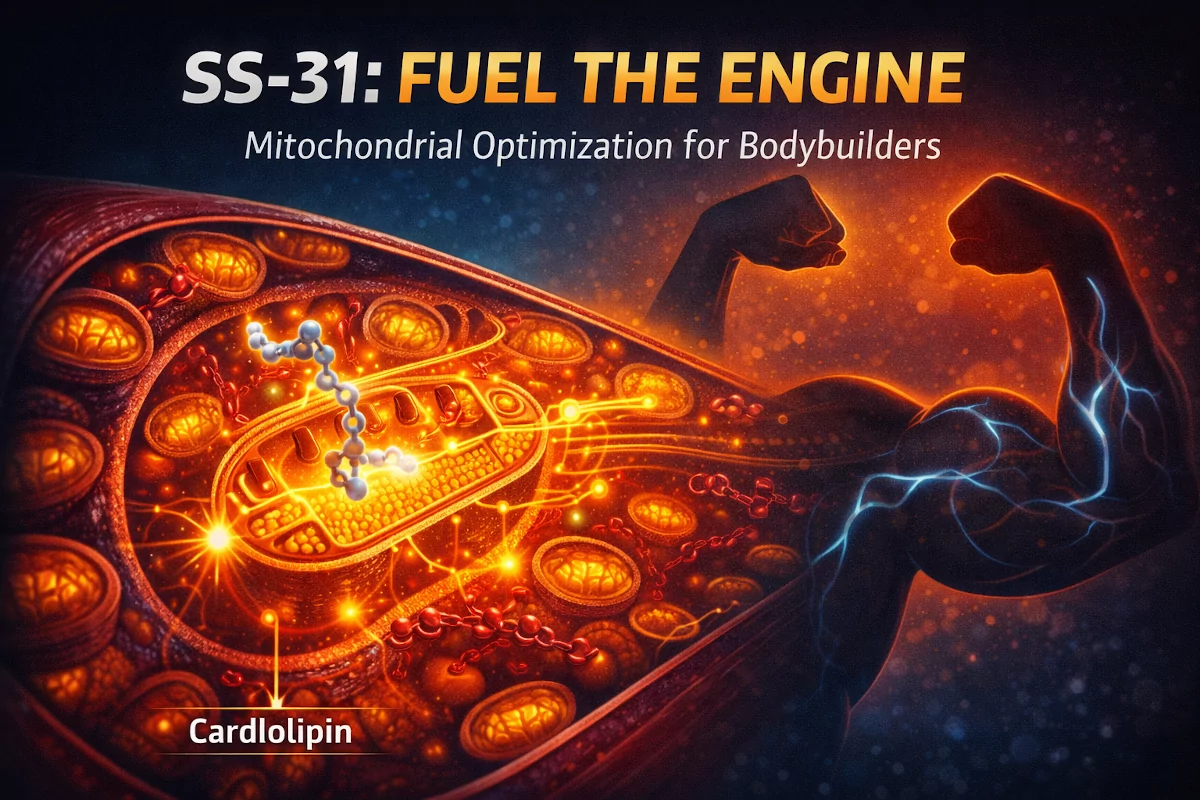
Every bodybuilder knows the feeling: you’re several sets into a brutal session when your energy plummets, the burn intensifies, and your performance hits a wall. You’ve optimized your macros, your training split, and your recovery sleep, yet this cellular fatigue persists. The bottleneck may not be in your muscles, but within the microscopic power plants that fuel them: your mitochondria. Enter SS-31 (Elamipretide), a groundbreaking peptide that represents a paradigm shift in performance enhancement. Unlike compounds that directly build muscle or burn fat, SS-31 targets the very foundation of cellular energy and resilience. For the modern athlete, this isn’t just another supplement—it’s an investment in the cellular infrastructure that dictates strength, endurance, and longevity.
The Mitochondrial Bottleneck: The Hidden Limit to Gains
Mitochondria are more than just cellular “powerhouses.” They are dynamic organelles responsible for producing ATP (adenosine triphosphate), regulating metabolism, and controlling cell survival. In bodybuilding, their role is critical:
- High-Volume Training: Demands massive, sustained ATP production.
- Metabolic Stress: Generates reactive oxygen species (ROS) as a byproduct of intense respiration.
- Recovery: Requires efficient cellular repair and clean-up of metabolic waste.
Intense training can damage mitochondrial membranes, particularly a phospholipid called cardiolipin. When cardiolipin is damaged, the electron transport chain (the process that makes ATP) becomes “leaky,” producing excessive ROS, reducing energy output, and triggering inflammation. This is the mitochondrial bottleneck. SS-31 addresses this problem at its source, working not as a superficial antioxidant, but as a targeted mitochondrial repair agent. This approach is part of the sophisticated new frontier in performance science explored in Beyond Steroids: How Peptides Are Revolutionizing Fitness and Recovery.
SS-31 Decoded: The Mitochondrial “Bodyguard”
SS-31, also known as Elamipretide or MTP-131, is a small, synthetic tetra-peptide (D-Arg-Dmt-Lys-Phe-NH₂) from the Szeto-Schiller family. Its design is ingenious: it possesses a unique chemical structure that allows it to selectively accumulate hundreds of times more in the inner mitochondrial membrane than in the rest of the cell.
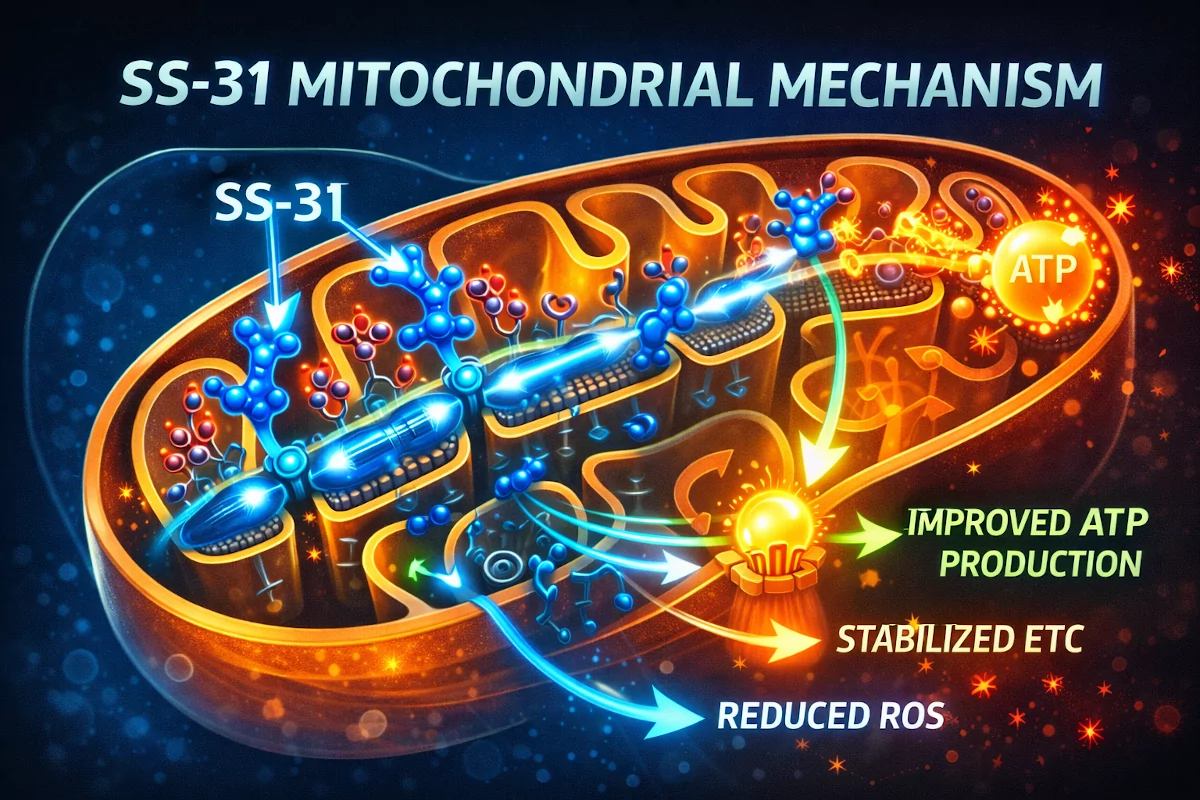
Its mechanism is a three-part rescue mission:
- Targeted Binding: It specifically attaches to damaged cardiolipin, stabilizing the mitochondrial membrane.
- Restoring Efficiency: By stabilizing the membrane, it optimizes the electron transport chain, reducing energy waste and boosting ATP synthesis.
- Source-Level Antioxidant Protection: It prevents the formation of harmful ROS at their production site, offering protection far superior to systemic antioxidants like NAC or glutathione.
In essence, SS-31 doesn’t just mop up oxidative damage after it happens; it prevents the spill in the first place and fixes the leaking pipe. This fundamental action translates into several powerful benefits for the athlete.
The Bodybuilder’s Advantage: Performance Benefits of Mitochondrial Optimization
For the athlete, a more efficient, resilient cellular engine means tangible improvements where it matters most:
- Enhanced Work Capacity & Endurance: By optimizing ATP production, SS-31 can help you maintain power output for more high-quality reps and sets. It may reduce the perception of fatigue and lactic acid burn by improving cellular energy metabolism.
- Accelerated Systemic Recovery: Minimizing exercise-induced oxidative damage at the mitochondrial level can lead to faster return to homeostasis. This means less systemic inflammation and potentially reduced DOMS, allowing for more frequent, high-intensity training. For a peptide that supports structural repair, see our guide on How Peptides Like TB-500 Support Full-Body Recovery.
- Improved Muscle Cell Protection: During extreme dieting or cutting phases, the body is under significant metabolic stress. SS-31’s role in supporting cell survival can help protect lean muscle mass from catabolic breakdown by maintaining healthy mitochondrial function.
- Cardiovascular Support: Emerging research suggests SS-31 can improve endothelial function and cardiac output. For bodybuilders, this means better nutrient and oxygen delivery to working muscles, supporting both performance and the demands of increased vascularity.
Protocol Design: Integrating SS-31 into Your Regimen
Implementing SS-31 requires a strategic approach focused on timing. This information is for research and educational purposes. Consult a healthcare professional.
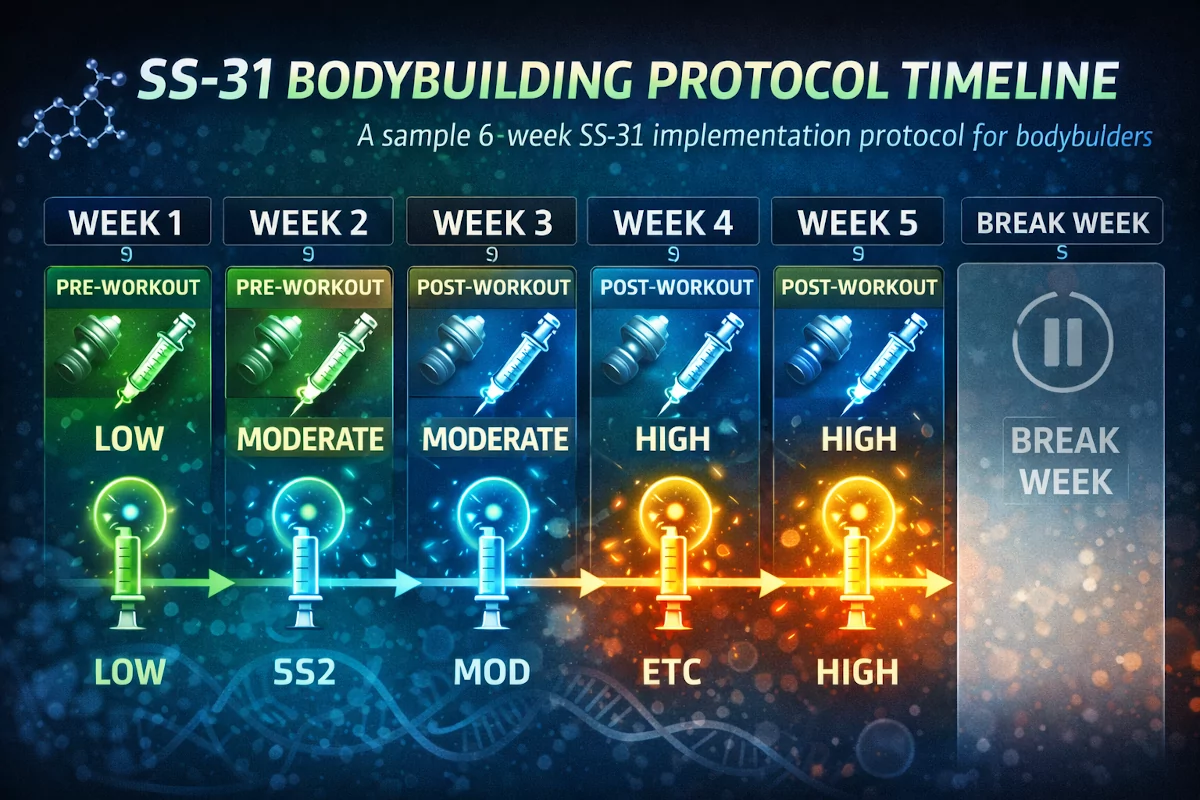
- Strategic Timing is Key:
- Pre-Workout (30-60 min prior): To “prime” mitochondria for the energy demands of training.
- Post-Workout (within 30 min): To aid in recovery by mitigating exercise-induced oxidative stress.
- A common approach: Utilize both, with a lower morning/pre-workout dose and a higher post-workout dose.
- Dosing Based on Research: Translating from animal and human clinical models, a common subcutaneous research dose ranges from 0.5 to 2.0 mg/kg of body weight per day, often split. A practical starting point for many is 10-40mg total daily.
- Cycle Length: Typical research cycles last 4-8 weeks, followed by an equal break to preserve the body’s natural regulatory mechanisms and prevent receptor adaptation.
- Stacking for Synergy: SS-31 can be powerfully combined with other compounds:
- With AICAR: For comprehensive metabolic and mitochondrial optimization. Learn about AICAR in our guide on Maximizing Rest Days.
- With BPC-157 or TB-500: For a holistic “repair stack” targeting both cellular infrastructure and tissue.
- With Growth Hormone Secretagogues: Supporting the anabolic environment created by peptides like IGF-1 LR3.
Evidence, Sourcing, and Realistic Expectations
The mechanistic science behind SS-31 is robust, with promising studies in models of mitochondrial disease, heart failure, and aging. Human trials for conditions like primary mitochondrial myopathy show improved biomarkers and endurance. Direct, large-scale studies in elite athletes are limited, placing it in the realm of advanced, evidence-informed experimentation.
- Safety Profile: SS-31 has demonstrated an exceptionally clean safety record in clinical trials, with minimal side effects reported.
- The Critical Importance of Sourcing: As a research peptide, purity is non-negotiable. Impurities can render it ineffective. Researchers must seek suppliers that provide verifiable third-party mass spectrometry analysis. Those seeking high-quality research materials might look for a premium SS-31 peptide injection, but must always independently verify Certificates of Analysis for purity, sequence, and concentration. (This link is a placeholder for the required anchor; independent verification is essential).
- Managing Expectations: SS-31 is not a stimulant or a direct anabolic. You will not “feel” it kick in. Its benefits are observed over weeks as improved training metrics, faster recovery, and sustained energy.
Conclusion: Is SS-31 the Next Frontier for Bodybuilders?
SS-31 represents a profound shift from targeting symptoms (fatigue, soreness) to fortifying foundational biology. It is not for the beginner or those seeking instant, dramatic changes.
The ideal candidate is: The advanced bodybuilder or athlete who has optimized the fundamentals and is looking for a marginal gain rooted in deep cellular science. It’s for the individual concerned with long-term performance sustainability and cellular health, much like the longevity-focused approach seen with Livagen for liver support.
The bottom line: If you view your body as a high-performance machine, SS-31 offers a unique tool to upgrade its most essential engine—the mitochondrion. By investing in cellular efficiency and resilience, you’re not just training for your next session, but for a longer, more productive career at the peak of your potential.
